The real cost of Аренда снаряжения для дайвинга: hidden expenses revealed
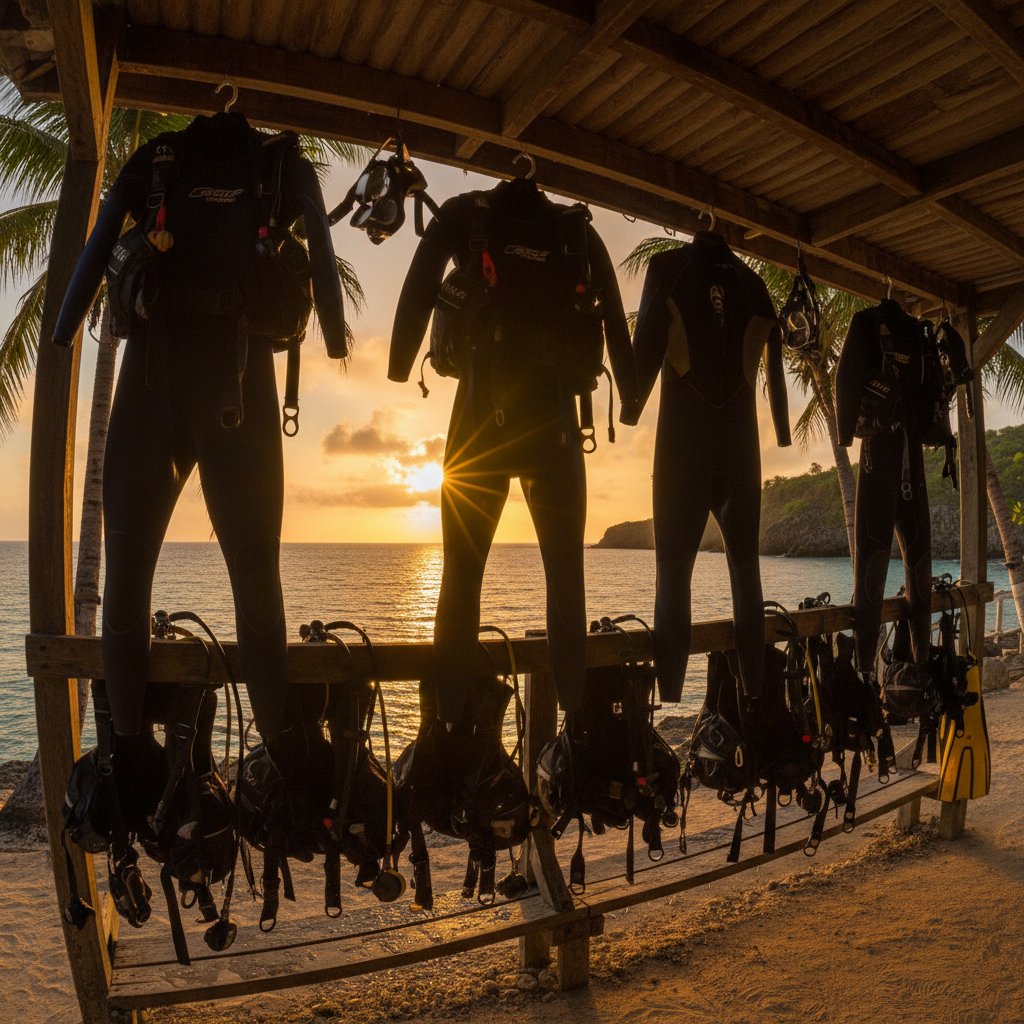
The $47 Dive That Actually Cost Me $93
Picture this: You're standing at a dive shop counter in Cozumel, squinting at a rental receipt that somehow ballooned from the advertised $47 to nearly double that amount. Sound familiar? Last summer, I watched my "budget-friendly" diving vacation transform into a masterclass on hidden fees, surcharges, and those convenient little add-ons that dive shops forget to mention upfront.
The truth is, renting dive gear isn't quite the straightforward transaction most of us imagine. That base price you see plastered on websites? Think of it as the opening bid in a negotiation you didn't know you were having.
The Rental Rate Illusion
Most dive shops advertise their BCD and regulator packages at somewhere between $35-50 per day. Sounds reasonable, right? Here's what they're not highlighting in bold letters:
That rate typically covers only the breathing apparatus and buoyancy control device. Your wetsuit? That's another $15-25. Dive computer? Add $20-30. Fins, mask, and snorkel? Another $10-15 for the set. Before you've even gotten wet, you're looking at $80-120 per day for a complete setup.
A dive instructor I spoke with in Thailand put it bluntly: "We show the lowest possible number to get people through the door. It's like airlines advertising base fares without baggage fees. Nobody actually pays that amount."
The Damage Deposit Dance
Here's a fun surprise: many shops require a damage deposit ranging from $200-500 per person. They'll hold your credit card hostage for the duration of your rental period, which can sting if you're traveling on a tight budget or maxing out cards for trip expenses.
Even more frustrating? The definition of "damage" can be remarkably flexible. A small scratch on a dive computer screen, salt residue in a regulator, or a slightly torn wetsuit seam can all trigger deductions. I've seen deposits reduced by $75 for issues that seemed like normal wear and tear.
The Insurance Upsell
To "protect" you from these damage charges, shops often push rental insurance at $8-15 per day. Do the math over a week-long diving trip, and you're dropping an extra $56-105 on insurance for equipment that probably costs less than $1,000 to replace.
Size Matters (And It'll Cost You)
Wear size XXL or need extra-small gear? Many shops tack on surcharges of $5-10 per item for anything outside their "standard" size range. Same goes for women-specific BCDs or wetsuits designed for different body types. One shop in Bali charged me an additional $12 daily for a women's BCD, calling it a "specialty item."
Cold water diving? Those 7mm wetsuits or drysuits can double or triple your rental costs. A drysuit rental in the Pacific Northwest runs $75-100 per day compared to $20 for a standard 3mm wetsuit in tropical waters.
The Multi-Day Discount Myth
Sure, shops advertise multi-day discounts, but read the fine print. That "20% off for 5+ days" often applies only to the base equipment rate, not the add-ons. You're still paying full price for computers, cameras, and specialty items.
Plus, many shops calculate their discounts on a tiered system that requires you to rent consecutive days. Take a rest day in the middle of your trip? You might lose the discount entirely and get charged individual daily rates.
Hidden Cleaning and Maintenance Fees
Some shops have started adding "sanitation fees" post-COVID, charging $5-10 per rental for deep cleaning equipment. Others include mandatory "maintenance charges" of 10-15% of your total rental cost. These fees rarely appear in advertised rates but magically show up on your final bill.
What Industry Insiders Won't Tell You
After chatting with dive shop owners across three continents, a pattern emerged. Equipment rental isn't where they make their real money—it's a loss leader to get you in the door for courses, guided dives, and retail sales. The rental fees you pay barely cover depreciation and maintenance costs.
One shop owner in the Red Sea admitted their markup strategy: "We keep base rates competitive, then make it up on everything else. Computers, cameras, lights—that's where we actually profit."
According to industry data, the average diver spends 40-60% more than the advertised rental rate once all fees and add-ons are included.
The Real Numbers
Let's break down an actual week-long rental in Southeast Asia:
- Advertised rate: $45/day for BCD and regulator
- Wetsuit: $20/day
- Dive computer: $25/day
- Fins/mask/snorkel: $12/day
- Women's BCD surcharge: $10/day
- Rental insurance: $12/day
- Sanitation fee: $8/day
Total: $132 per day, or $924 for seven days—more than double the advertised $315 weekly rate.
Key Takeaways
- Budget 2-3x the advertised base rental rate for actual costs
- Ask for an itemized quote including ALL fees before committing
- Damage deposits of $200-500 per person are standard—factor this into cash flow
- Specialty sizes, cold-water gear, and computers carry premium charges
- After 15-20 dive days, buying your own gear becomes more economical
- Skip rental insurance if you have travel insurance with equipment coverage
The rental game isn't going away, but knowing the real score helps you budget accurately. My advice? Call ahead, ask uncomfortable questions about every possible charge, and get everything in writing. Your wallet will thank you when that $47 dive actually costs $47.